
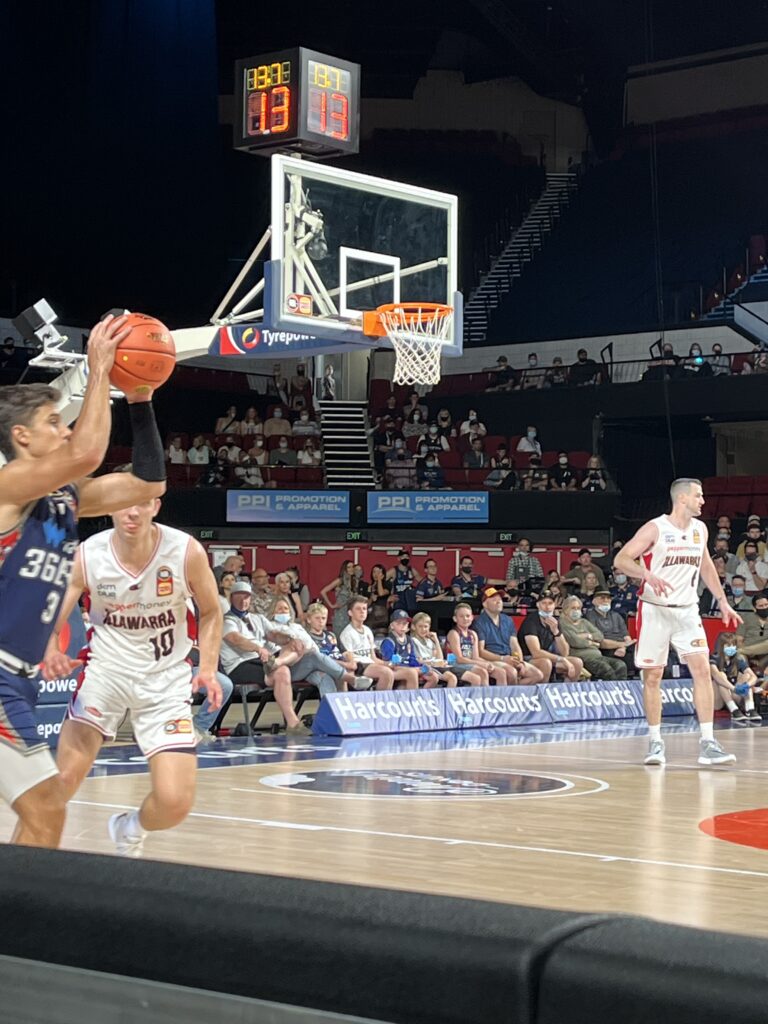
The shot clock exists for one reason. It stops teams sitting on the ball. Under the FIBA rules Australian basketball follows, the team with the ball has 24 seconds to get a shot away, and not just any shot. It has to hit the ring. Miss the deadline and it’s a violation. Buzzer sounds, possession goes to the other team.
That’s the headline. The detail is where scorers, coaches and venue managers get caught out. When it resets to 14. When it stops. When it’s switched off entirely.
The 24-second rule
When a team gains possession, the shot clock starts at 24 seconds. Before it hits zero, that team must attempt a field goal. The ball has to leave the shooter’s hand before the buzzer and then touch the ring or go in. If the buzzer sounds first, or the shot misses everything, it’s a shot clock violation and the opposition gets the ball. If the ball is in the air when the buzzer sounds and then hits the ring, play continues, which is why you’ll see a buzzer beat a shot that’s still perfectly legal.
When the clock resets to 14 (not 24)
The 14-second reset is the rule most often misunderstood at domestic level. Under FIBA rules, the clock resets to 14 seconds, not the full 24, when the offensive team keeps or regains the ball in their frontcourt in certain situations. The big three are these.
- Offensive rebound. The shooting team rebounds their own missed shot after it hit the ring
- A foul or violation by the defence with the ball already in the frontcourt, when the shot clock shows 13 or less
- The defence knocks the ball out of bounds in the frontcourt and the shot clock shows 13 or less
The logic is that the ball is already deep in attack, so the attacking team doesn’t need the full 24 to build a play again. If the clock shows 14 or more in those frontcourt situations, it keeps running from where it was.
When the shot clock stops and when it’s off
The shot clock runs with live play and stops whenever the game clock stops. Dead balls, fouls, time-outs. It’s switched off entirely when the game clock drops below the shot clock’s remaining time at the end of a period. With 18 seconds left in the quarter and a fresh 24 available, the shot clock is turned off, because the period will end first.
Do Australian domestic competitions use a shot clock?
It depends on the level. National and state-league basketball runs full FIBA shot clock rules with dedicated clocks and operators. Below that, associations set their own requirements. Many senior domestic competitions run shot clocks at show courts or finals, while most junior and social grades play without one and leave stalling to the referees. If your association is introducing shot clocks, it usually starts with representative grades and works down, and venues get asked to provide the equipment. Check your competition’s by-laws rather than assuming. The trend across associations is toward more shot clock use, not less.
What a venue needs to run a shot clock
Three things. Clocks the players can see, which means paired displays above each backboard or at the court corners showing the count at both ends. A controller at the score bench, with start, stop and 14/24 reset buttons, usually run alongside the game clock. And integration with your scoreboard and siren, so violations sound clearly and the two clocks stay in sync. ESA shot clocks sync with the main scoreboard and reset from the controller your scorer is already using, so the 14-second reset is one button. That is the difference between a smooth game and a bench argument. Our boards are built shot-clock ready, so a venue can buy the scoreboard now and add the clocks when the competition level demands them, without replacing the system.
Frequently Asked Questions
What happens if the shot clock operator makes a mistake?
Referees can correct obvious shot clock errors, adjusting the time or replaying from the point of the error, depending on when it’s caught and the competition’s rules. In practice, good equipment prevents most mistakes. A dedicated 14-second reset button removes the most common operator error, which is manually resetting to 24 after an offensive rebound.
Does the shot clock reset on a defensive foul?
In the backcourt, yes, back to 24. In the frontcourt, it depends on the time showing. If 14 or more seconds remain, the clock continues from where it was. If 13 or less remain, it resets to 14. It’s the fiddliest part of the rule, and exactly what a well-designed controller handles with one button.
Do junior games in Australia use a shot clock?
Mostly not at ordinary domestic junior level, though representative junior competitions increasingly do. Associations set their own by-laws, so the honest answer is to check yours. Venues hosting representative fixtures are commonly asked to have shot clocks available even if weekly games don’t use them.
Can a shot clock be added to our existing scoreboard?
If it’s an ESA board, yes. Our scoreboards are built shot-clock ready, so paired clocks can be added and run from the controller you already have without replacing the board. If your scoreboard came from another maker, call us with the model and we’ll tell you what’s possible. If you’re planning a scoreboard upgrade anyway, cabling for shot clocks during that install saves money even if the clocks come later.
Need shot clocks or a full timing setup for your courts? Call Electronic Scoreboards Australia on 1300 023 422 and we’ll spec a system for your venue.