
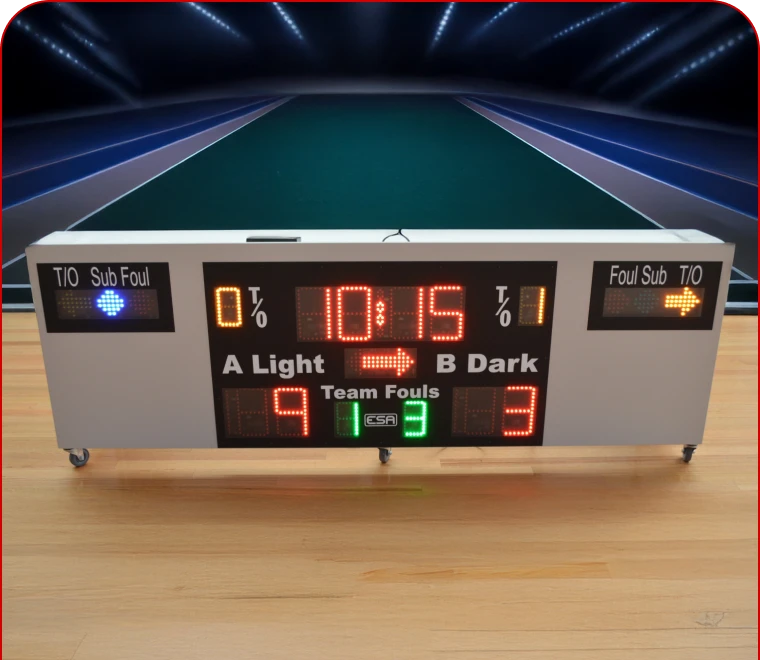
Here’s the open secret of community sport: most of the scoreboards you see at local grounds weren’t paid for by the club. They were funded by sports club grants, council programs, school budgets and sponsors, often stacked together. Australia runs a deep bench of community sport infrastructure grants at federal, state and council level, and a scoreboard is exactly the kind of visible, shared-benefit project assessors like to fund.
The catch is that grant rounds open, close and change names constantly, and applications fail on paperwork more often than merit. This article maps the funding sources worth watching, what a scoreboard application needs, and how to run an application process that gets approved.
Where the Money Comes From
Federal and national programs
Federal community sport infrastructure grants come and go with budgets and election cycles, typically funding facility upgrades at local clubs through applications lodged by clubs or councils. Check the Australian Sports Commission and GrantConnect for what’s currently open, and treat any program a committee member ‘remembers from a few years ago’ as needing verification.
State government sport and recreation grants
Every state runs its own stream: sport and recreation infrastructure programs that fund equipment and minor facility works, usually in annual or twice-yearly rounds. These are the workhorse funders of scoreboard projects, with grants commonly in the thousands to tens of thousands. Each state and territory publishes its current rounds online:
- Victoria: https://sport.vic.gov.au/funding
- New South Wales: sport.nsw.gov.au/grants
- Queensland: qld.gov.au/recreation/sports/funding
- South Australia: orsr.sa.gov.au/grants
- Western Australia: wa.gov.au (search sport and recreation funding)
- Tasmania: active.tas.gov.au/grants_and_funding
- Northern Territory: nt.gov.au/leisure/sport/grants
- ACT: sport.act.gov.au/grants
Subscription directories like The Grants Hub and GrantGuru also round up open rounds across every level in one place.
Sport-specific and corporate programs
Sporting codes and their partners fund grassroots upgrades directly. The Telstra Footy Grants program (previously Telstra Footy Country Grants) is the standout: the AFL and Telstra are distributing $8 million between 2024 and 2028, with regional and metro community football clubs able to apply for up to $20,000 per project, and scoreboard upgrades are on the eligible list. Rounds run through the first half of each year via play.afl, with the next program announced late each year. State sporting associations often run or promote similar programs for their code, and they’re less contested than general government rounds.
Local councils
Council community grants fly under the radar and suit scoreboard-sized projects well. Many councils also own the grounds clubs play on, which means they sometimes co-fund or fully fund scoreboard upgrades as asset improvements; a conversation with your council’s sport and recreation officer is never wasted.
Schools
School scoreboards are usually funded through P&C fundraising, capital works budgets, or state education department infrastructure programs, and occasionally through shared-use agreements where the local association contributes because its competitions use the school’s courts.
What a Winning Application Includes
- An itemised, grant-ready quote: board, installation, electrical work and freight, on supplier letterhead with an ABN. Assessors reject vague numbers; ESA quotes are itemised with installation included for exactly this reason.
- A community benefit story: who uses the ground, how many teams and juniors, what the scoreboard changes (volunteer workload, spectator experience, hosting finals and carnivals, shared use by other codes and the school next door).
- Evidence of need: photos of the broken manual scoreboard do more work than three paragraphs of prose.
- Co-contribution: rounds often favour clubs putting in something, whether cash, sponsorship or volunteer labour for site works. Even 10 to 20 per cent shifts an application from ‘asking’ to ‘partnering’.
- Governance basics: incorporation, insurance, a bank account in the club’s name, and landowner consent (often the council) for any fixed installation.
Why Applications Get Knocked Back
Ask anyone who has sat on both sides of a grant round and they’ll tell you the same thing: the most deserving project doesn’t always win, the best prepared one does. Most rejections trace back to a handful of avoidable mistakes.
- Applying to the wrong round. Every program has a stated goal, like lifting female participation or upgrading regional facilities. If you can’t draw a straight line from your scoreboard to that goal, save your volunteer hours for a round where you can.
- Sloppy submissions. Real people read these applications. Spelling errors, muddled budgets and missing documents send a strong project to the bottom of the pile.
- Copy-paste applications. Assessors spot a recycled submission instantly. Fewer, stronger applications beat scattergun attempts every time.
- Underestimating the commitment. Most rounds expect a co-contribution and proof you can deliver, so budget for both before you apply.
- Giving up. A knock-back saps motivation, and plenty of clubs stop applying one round before they’d have won. Ask for feedback on every unsuccessful attempt; it’s the best raw material for the next one.
From Application to Approval: A Process That Works
Start six to nine months before you want the board on the wall. Month one: shortlist the board and request an itemised quote and specification sheet. Reputable suppliers need time to prepare proper supporting documents, so don’t leave this until the week before deadline. Month two: identify open rounds and read the application guidelines end to end before writing a word; they hold most of the clues about what assessors want to see. Months three to four: write, review and lodge, with letters of support from your association, school or council.
When you write:
- Customise everything. Budget, timeline and wording tuned to that specific round, answering its stated goal directly.
- Share the workload. A few committee members each owning a small piece beats one exhausted volunteer doing the lot.
- Proofread twice, then hand the full application to someone who wasn’t involved for a fresh read.
- Submit early and confirm receipt. Late or incomplete submissions are rejected outright, and most portals send an automatic confirmation. If it doesn’t arrive, follow up.
- Answer assessor questions quickly, with the same care as the original submission, and document the feedback, win or lose, for whoever runs the next round.
Miss a round? They cycle. Keep the quote current, keep the photos of the sad old scoreboard, and lodge again next round. Persistence is the most common trait of funded clubs.
Stacking Grants With Sponsorship and Fundraising
The strongest funding plans stack sources. A state grant covers the board, a local business sponsors the installation in exchange for a permanent panel on the scoreboard, and tax-deductible donations through a body like the Australian Sports Foundation close the gap. Sponsorship works particularly well on scoreboards because the asset itself is the advertising space: a sponsor’s name lives where every spectator looks, every game, for a decade.
If you’re considering an LED video scoreboard, sponsorship changes from gap-filler to business case: rotating sponsor content is sellable advertising, and clubs use that projected revenue in the application itself to show ongoing community benefit and financial sustainability.
Frequently Asked Questions
What grants are available for sports clubs in Australia right now?
It changes constantly, which is the honest answer. Check three places: GrantConnect and the Australian Sports Commission for federal programs, your state’s sport and recreation department for state rounds, and your council’s community grants page. Your state sporting association also circulates code-specific programs like country footy and netball grants.
How much can a club get from a sports infrastructure grant?
Small equipment and minor works rounds commonly fund from a few thousand dollars up to $20,000 or more, which covers most fixed-digit scoreboards outright. Larger infrastructure rounds fund bigger projects and can cover LED video boards, usually with a co-contribution requirement. Match the program’s funding band to your quote before writing a word.
Can schools apply for sports club grants?
Some programs accept schools directly; others require an incorporated sporting club or council as applicant. A common workaround is partnership: the school and the local association apply together under a shared-use arrangement, which also strengthens the community-benefit case. Read each program’s eligibility list before assuming either way.
Why do grant applications get rejected?
Process, more often than merit. The usual culprits: applying to rounds whose goals don’t match the project, rushed submissions with errors, recycled applications, and missing paperwork like itemised quotes or landowner consent. Late submissions are rejected outright, which is why lodging early and confirming receipt matters.
What does a grant application need from the scoreboard supplier?
An itemised quote on letterhead covering the board, installation, electrical work and freight, a specification sheet, and ideally an image of the proposed board. Assessors want confidence the number is real and the project is shovel-ready. ESA provides grant-ready quotes and documentation as standard; ask when you enquire.
Do grants cover scoreboard installation costs?
Generally yes, if installation is in the quote and the budget you submit. This is why an all-inclusive itemised quote matters: applications that later discover mounting, electrical and freight costs blow their budgets and their acquittals. Quote the whole project, apply for the whole project.
Ready to put an application together? Call Electronic Scoreboards Australia on 1300 023 422 for a grant-ready quote and guidance on current funding options.